As promised, the details for the last post I did on Brick Wall. “Brick walls are there for a reason: they let us prove how badly we want things.” – Professor Randy Pausch.
This year, on my birthday, I received a special gift from a friend. My friend and his girlfriend gave me ‘The Last Lecture‘ by Randy Pausch (Oct. 23, 1960 – July 25, 2008) with Jeffrey Zaslow. Randy Pausch was a Computer Science Professor at Carnegie Mellon. Some of you may have read the book already. It was first the lecture before the book. ‘The Last Lecture’ is a series of talks by Professors who were asked to imagine their demise and to give talks on what matters most to them.
However, for Professor Randy Pausch, he didn’t need to imagine it as his last since he was diagnosed with terminal cancer and had only a few months left to live. His lecture was not about dying, but that of “Really Achieving Your Childhood Dreams.” Through his moving presentation, Professor Pausch talked about his lessons learned and gave advice to students on how to achieve their own career and personal goals.
One of the points that sunk deep into me, like words set in stone, was the point he made about brick wall. If you watched ‘The Last Lecture’ video, which I have embedded here, he probably mentioned the brick wall about a dozen times. As he said, “Brick walls are there for a reason…” How true isn’t it?
Throughout our lives, we will have many brick walls. Some of which are invisible to the eyes like the emotional brick walls which we might build to protect ourselves and at the same times preventing others from reaching out to us. Such brick walls are the hardest to break through as it depends a lot on ourselves to break through them. And even before we can break through them, we have to be self-aware of these brick walls that we have built up around ourselves.
The other brick walls are often made of flesh; by our loved ones, our friends and people around us. It can be a challenge to break through these walls too especially when we knew that our loved ones and friends are concerned about us. However, being concerned about us doesn’t mean that they will always know what may be best for us. In this case, we not only have to break through the physical brick wall but also the emotional portion that comes with it.
However, as what Professor Randy Pausch said, “Brick walls are there for a reason…” They are there to test how much we wanted what we want. In his own words, “… The brick walls are there to stop the people who don’t want it badly enough. They’re there to stop the other people.”
Are you facing any brick wall in your life now? Do remember that the brick wall is there for a reason.
December 1st is the World AIDS Day 2008. There was a TV series being produced in Singapore, in conjunction to the World AIDS Day 2008 on December 1st. In the TV series, the leading actor was infected with AIDS through a single account of unsafe casual sex. The TV series attempted to raise the awareness of AIDS by informing the viewers to be faithful to a single sex partner and not to indulge in casual sex. Fortunately, the leading actor eventually gained the support of his family and friends.
This leads me to the questions, “How many people infected with AIDS can be forgiven by their family” and “How many of them have gotten support from their family and friends eventually?” I certainly hope the answers are as heartening as the case portrayed in the TV series. However, I understand that, I for once can be part of the heartening answers. As what Gandhi said, “Be the change you want to see in the World.” The good news is, you too can join me in this change.
Over the weekend, there was a special report on AIDS in the newspaper and there is a particularly disturbing headline which read, “HIV infection rates in Singapore have spiked, rising tenfold from 42 in 1991 to 423 in 2007.” While in Thailand, they have fallen from 143,000 to 17,000.
According to the report, “Education, awareness and safe sex helped in Thailand. So did easy access to generic drugs that can keep people with HIV healthy for many years.” In Singapore, without subsidies, the medication can amount to more than $1,000 a month. HIV patients either have to smuggle cheaper generic drugs from Thailand, or do without medication and there are cases where patients just give up and wait to die. Can we just leave people to die?
There was a move by the Singapore government recently, to provide HIV testing to all patients aged 21 and above who are admitted to the six public hospitals here by the end of the years. Patients are allowed to opt out of the test. This strategic move by the government aims to identify more HIV-positive patients in the early stages of the disease. Would this move be effective in getting people to opt for the voluntary testing but without availability of treatment?
Under the current scheme, HIV patients can use up to $550 from their Medisave accounts monthly for their HIV medication. But patients here pay $353 and $511 while their counterparts in Thailand and China pay only $65 and between $200 and $300 for patented drugs respectively. “These prices are well beyond what HIV patients here – mostly from lower socioeconomic backgrounds – can afford,” according to the report.
On one account, a part-time cashier, who believes she was infected by a former boyfriend, had to be hospitalised for HIV-related complications such as pneumonia. She used up almost all of her $7,000 in her Medisave account and said that she wouldn’t be around, if not for her social worker who told her how to get drugs from Thailand.
I tend to agree with one of the doctors who pointed out the irony that on one hand we promote Singapore as a medical hub but on the other hand, we are telling our HIV patients to go elsewhere for treatment.
It is ashamed that Singapore signed the 2006 UNAids declaration to scale up universal access to HIV prevention, treatment care and support by 2010. “I don’t think we have made any headway since. We are the only developed nation which does not provide free or subsidised medication for HIV patients, ” according to Mr. Brenton Wong, former vice-president of non-government organisation Action For Aids. He brought out another point, “Patients won’t come forward to be tested when they know they won’t get treatment. Why risk the discrimination?”
You may not agree with this, but the discrimination HIV patients are experiencing is something we can never hope to understand by putting ourselves in their shoes.
Besides having treatment made available to HIV patients, also important are education and awareness programs to the general public so they can learn more about AIDS. And hopefully with education and awareness, the general public can eventually remove their discrimination against HIV patients.
As the saying goes, “Prevention is better than cure,” we can play our parts to be faithful to one partner and not have casual sex regardless of safe or unsafe.
How is the AIDS support and treatment in your country? Are they facing the same problem as in Singapore? Do the HIV-positive patients face similar discrimination as in the HIV-positive patients here?
*Updated March 28, 2009: I really should have updated this sooner. Singapore is already making plan to subsidise HIV patients for their medication.
For help and support in Singapore, please go to: Action For AIDS
Today, I will be touching on a heavy topic and yet this could concern you and I and people around us. According to the National Stroke Association, Stroke is the third leading cause of death in America and the No. 1 cause of adult disability. Fortunately, according to them, “80% of strokes are preventable.” Thus we have the POWER in us to prevent Stroke.
What is Stroke?
According to MayoClinic.com, “A Stroke occurs when the blood supply to a part of your brain is interrupted or severely reduced, depriving brain tissue of oxygen and nutrients. Within a few minutes, brain cells begin to die.” And according to the fact sheet by National Stroke Association, “Two million brain cells die every minute during stroke, increasing risk of permanent brain damage, disability or death. Recognizing symptoms and acting fast to get medical attention can save a life and limit disabilities.”
In so speaking, time is an important factor here and it can very well be the deciding factor on whether the person suffering from a Stroke attack can recover completely. Therapy with clot-busting drugs must start within three hours. Quick treatment not only improves your chances of survival, but may also reduce the amount of complications resulting from the stroke. The challenge is recognizing Stroke as most people are unaware of the symptoms.
How do we recognize the symptoms of Stroke?
The symptoms of Stroke include:
Sudden numbness or weakness of the face, arm or leg; especially on one side of the body
Sudden confusion, trouble speaking or understanding
Sudden trouble seeing in one or both eyes
Sudden trouble walking, dizziness, loss of balance or coordination
Sudden severe headache with no known cause
In recognizing these symptoms, there is an easy test to further determine if a person has suffered from Stroke attack or are having symptoms of Stroke. I received an email from a friend about this simple test and decided to Google for some information to check its validity. True enough, I found a few sources providing the same information.
This simple test will help you detect stroke symptoms and Act F.A.S.T.:
F: Facial weakness, can the person smile; have their mouth or eyes drooped? A: Arm weakness, can the person raise both arms? Does one arm drift downward? S: Speech difficulty, can the person speak clearly and understand what you say? T: Time to act, act FAST and call for ambulance or paramedics immediately
According to the email which I received, it mentioned that there is one more way to know if a person has suffered a stroke – ask the person to stick out his/her tongue (I have not been able to verify this point). If the tongue is not straight or droops or slants to one side rather than coming straight out of his/her mouth, it is an indication of a Stroke.
If the person has difficulty in performing any one of these tasks, it is more than likely he/she has suffered a Stroke and medical help should be IMMEDIATELY called for.
As the saying goes, “Prevention is better than cure.” Since it was mentioned earlier that we have the POWER in us to prevent Stroke, let us take a look at some of the deciding factors:
If we can act F.A.S.T with a person who has suffered from a Stroke, we can not only save the person’s life but also improve the person’s chance of complete recovery. You may view some statistics of Stroke from TheUniversityHospital.com. If this information is useful to you. Please pass around this F.A.S.T. Wishing everyone great health and goodness in every areas of your life.
Try Perfectmatch.com – The Best Approach to Finding the Right Person for You.
——————————————————-
I am honored to be awarded an award from Kathy at Simply Abundant Living. Thank you Kathy for the award.
“These blogs are exceedingly charming. These kind bloggers aim to find and be friends. They are not interested in prizes or self-aggrandizement. Our hope is that when the ribbons of these prizes are cut, even more friendships are propagated. Please give more attention to these writers! Deliver this award to eight bloggers who must choose eight more and include this cleverly-written text into
the body of their award.”
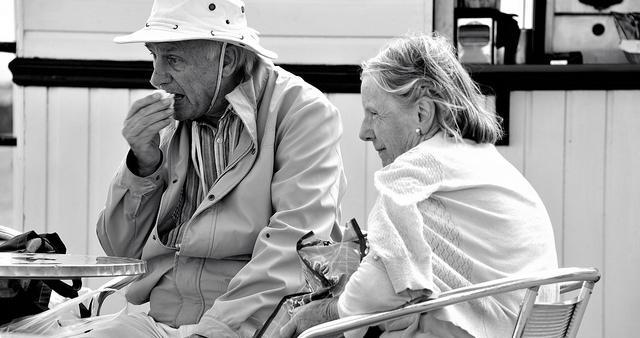
I received this email from a friend about a week ago and it sorts of reminds me of a newspaper headline I read in the newspaper last Saturday. The headline read, “A tidal waves of sadness: Dementia is striking more Singaporeans.” In that long special report, a couple spent a lifetime together but now ravaged by Alzheimer’s Disease, she can’t remember who he is. He, too, is slowly losing his mind. It was mentioned in the report that a particularly difficult aspect of dementia is the burden of care it imposes on loved ones.
Burden of care? Would you ever consider taking care of loved ones to be a burden? I certainly hope not. Taking care of loved ones is never a burden; it is love and responsibility. I do not deny there might be times when one will feel that way; this is normal as no one is perfect in this world – we are striving to be a better person but never perfect. There will be a time when taking care of loved ones is no longer a responsibility but out of unconditional love and giving.
Frankly speaking, I wouldn’t know if I will feel that way. I would be lying if I said I wouldn’t at this point of time when I have not gone through it. My mother and I had a few days of experience with my grandmother when we brought her home to stay with us for a few days. The first day was alright, she was happy. However, from the second day onwards, she started to miss home, was asking questions repetitively and was telling us to send her home the next day; she never stopped to worry about her son, daughter-in-law and grandchildren at home. She did not sleep well at night and walked around the house in the dark. And we couldn’t sleep well too as we were worried about her; looking out for her and checking on the slightest sound to make sure she was alright.
The challenge of taking care of loved ones is real but it is never a burden. One really really needs to be very very patient. I am grateful for the experience that my grandmother gave to me; it made me realise how important unconditional love is. This also provides me an unique opportunity to prepare myself to love and to give unconditionally. Something from the story below, “True love is neither physical, nor romantic. True love is an acceptance of all that is, has been, will be, and will not be.”
She Doesn’t Know Me, But I Still Know Who She Is
It was a busy morning, about 8:30, when an elderly gentleman in his 80′s, arrived to have stitches removed from his thumb.
He said he was in a hurry as he had an appointment at 9:00 am. I took his vital signs and had him take a seat, knowing it would be over an hour before someone would be able to see him.
I saw him looking at his watch, and decided, since I was not busy with another patient, I would evaluate his wound. On exam, it was well healed, so I talked to one of the doctors, got the needed supplies to remove his sutures and redress his wound.
While taking care of his wound, I asked him if he had another doctor’s appointment this morning, as he was in such a hurry. The gentleman told me no, that he needed to go to the nursing home to eat breakfast with his wife.
I inquired as to her health; he told me that she had been there for a while and that she was a victim of Alzheimer’s disease. As we talked, I asked if she would be upset if he was a bit late.
He replied that she no longer knew who he was, that she had not recognized him in five years now.
I was surprised, and asked him, ‘And you still go every morning, even though she doesn’t know who you are’? He smiled as he patted my hand and said, ‘She doesn’t know me, but I still know who she is’.
I had to hold back tears as he left; I had goose bumps on my arm, and thought, ‘That is the kind of love I want in my life’. True love is neither physical, nor romantic.
True love is an acceptance of all that is, has been, will be, and will not be.
With all the jokes and fun that are in e-mails, sometimes there is one that comes along that has an important message. This one I thought I could share with you.
The happiest people don’t necessarily have the best of everything; they just make the best of everything they have.
Join the Mailing list for Daily Love Quote in your Email now. The name and email address collected are not sold, given, or in any way disclosed to a third party. We will never give out your email address.