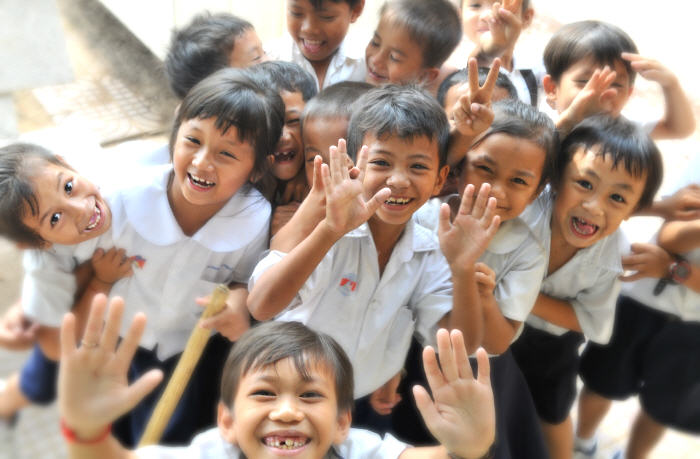
“Education is the key to unlocking the world, a passport to freedom.” – Oprah Winfrey
________________________________
Time truly flies; before we know it, a year has passed. Why did I sound so nostalgic today? Last year I blogged on the International Literacy Day which falls on September 8 of every year. It was proclaimed International Literacy Day by UNESCO on November 17, 1965. first celebrated in 1966. Its aim is to highlight the importance of literacy to individuals, communities and societies.
I was once a young child who took study for granted and would only want to play all days. And I grew up being a teenager who also took study for granted. However, I never hated studying and I studied hard for my examinations. Fortunately I did pretty well for my school and managed to graduate with a degree.
Looking back now, I enjoyed my study although I might not want to go through it again; I have always remembered the midnight run I had with friends around the campus during the exam period in University. A run after a day of study was always refreshing and welcome for us. I particularly enjoyed the night run as it was almost the coolest time of the day here in the hot and humid weather of Singapore.
I am very grateful and blessed to be given the opportunity to study without having to worry about everyday life back then; I just needed to focus on my study. This is very much the same condition that is given to children nowadays and yet they do not know how blessed they are to be given the opportunity to study. We couldn’t really blame them. I have walked the same path.
What I didn’t know then, “Some 774 million adults lack minimum literacy skills; one in five adults is still not literate and two-thirds of them are women; 72.1 million children are out-of-school and many more attend irregularly or drop out.” And I believe that many more are working hard each day to ‘earn’ their time to study. You and I, we could have been part of the statistics above. However, if you are reading this right at this moment without difficulty, you are probably as blessed as I am. Just for this, it is very good enough reason to be grateful.
Covering the International Literacy Day this year has a greater meaning to me as I take this new journey. As Steve Job shared in his Stanford Commencement Speech about ‘connecting the dots,’ it is amazing how the dots are joining up for me. It seems as if the Universe is pointing me closer and closer to where I want to go.
What I will do today is to share this piece of information with children I am meeting in my new journey and hopefully with this new piece of information, it would inspire change in their perspective towards learning; to embrace this beautiful gift of literacy given to them. It is also my hope that they will go on to share this information with others along their way.
This blog entry can also be found at: Advo Malaysia Inspiration Blog
It was like any other days, except that it was raining this morning. I hated rainy mornings, especially when I had to wake up 6am to get ready for school. I was such an ‘ungrateful’ boy; I didn’t know it was a great blessing to be worried free and to be able to concentrate on my main responsibility – to do well in school.
Almost every new school year I had new bag, stationeries and textbooks. Not to mention new school uniforms and shoe. I didn’t remember I had to wear a pair of shoe with holes in them for long.
In the school, the classroom was well sheltered with cement walls. It was well ventilated with windows and ceiling fans. The classroom was also properly lit with lightings. To further entice us with school, each of us had our own desk and chair. When we needed to sit on the cement floorings, we had proper mats to sit on. We even had regularly dental checked up to make sure we brushed our teeth.
What else did we have to worry about? Practically nothing, except probably with the examinations.
And yet, going through school seemed to be just a chore of growing up for me. I was pretty much going through the motion. Yes, still remember I mentioned I was an ‘ungrateful’ boy; I had very much taken everything for granted.
I had thought that literacy was a natural part of children my age. I didn’t know that being able to read and write were special privileges to many but not all. I didn’t know that in worlds away from mine, education was, and still is, a luxury to many … probably to many of them, it didn’t even cross their minds since they are struggling to survive.
According to UNESCO, “… one in five adults is still not literate and two-thirds of them are women while 75 million children are out of school.”
Back in 2003-2005, while I was working oversea, I remembered seeing children roaming in the street; some of them were peddling bracelets made from small white flowers, and some were running between cars, that stopped in the traffic, to ask for money.
One of my friends mentioned once that he was very tempted to unwind the window to pass the children some money but he stopped himself. He asked himself, “will I be doing more harms to these children than good if I pass them some money? If I do, they may have the wrong perception that money comes easily through begging.”
I kind of agree with him. If we give a person a fish, we feed the person for a day. However, if we could teach the person how to fish, we could ‘feed’ the person for life.
Literacy may not be the immediate solution to solve a person’s livelihood. Literacy will however, provide a person with the basic of learning and from there onwards, hopefully it will enable the person to further learning on his/her own. And hopefully with empowerment from literacy, the person’s life will improve eventually.
According to UNESCO on the important of literacy, “Literacy is at the heart of basic education for all, and essential for eradicating poverty, reducing child mortality, curbing population growth, achieving gender equality and ensuring sustainable development, peace and democracy.”
September 8 will be the International Literacy Day, which aims to highlight the importance of literacy to individuals, communities and societies. With education, I hope that one day those children running in the street will have better lives.
What do you think we can do? I have read in some blogs that we can make donation to organisations that have on-going literacy projects, or to volunteer in your communities to teaching adults and children how to read and write and we can also donate books to the library or organisations that bring these books to countries that need them.
————————————–
BetterWorldBooks.com – is one online bookstore that collects and sells books online to fund literacy initiatives worldwide. All books are available with free shipping to any location within the United States (or $3.97 worldwide). And in case you’re concerned about your eco-footprint, every order is shipped carbon neutral with offsets from Carbonfund.org.
BetterWorldBooks.com’s five primary literacy partners are Books for Africa, Room to Read, Worldfund, the National Center for Family Literacy, and Invisible Children.
Posted on Nov 30, 2008 under AIDS, Attitude, Bloggers Unite, Forgiveness, Health, HIV, Information, Life, Prevention Better than Cure, Saving Lives, World AIDS Day |
December 1st is the World AIDS Day 2008. There was a TV series being produced in Singapore, in conjunction to the World AIDS Day 2008 on December 1st. In the TV series, the leading actor was infected with AIDS through a single account of unsafe casual sex. The TV series attempted to raise the awareness of AIDS by informing the viewers to be faithful to a single sex partner and not to indulge in casual sex. Fortunately, the leading actor eventually gained the support of his family and friends.
This leads me to the questions, “How many people infected with AIDS can be forgiven by their family” and “How many of them have gotten support from their family and friends eventually?” I certainly hope the answers are as heartening as the case portrayed in the TV series. However, I understand that, I for once can be part of the heartening answers. As what Gandhi said, “Be the change you want to see in the World.” The good news is, you too can join me in this change.
Over the weekend, there was a special report on AIDS in the newspaper and there is a particularly disturbing headline which read, “HIV infection rates in Singapore have spiked, rising tenfold from 42 in 1991 to 423 in 2007.” While in Thailand, they have fallen from 143,000 to 17,000.
According to the report, “Education, awareness and safe sex helped in Thailand. So did easy access to generic drugs that can keep people with HIV healthy for many years.” In Singapore, without subsidies, the medication can amount to more than $1,000 a month. HIV patients either have to smuggle cheaper generic drugs from Thailand, or do without medication and there are cases where patients just give up and wait to die. Can we just leave people to die?
There was a move by the Singapore government recently, to provide HIV testing to all patients aged 21 and above who are admitted to the six public hospitals here by the end of the years. Patients are allowed to opt out of the test. This strategic move by the government aims to identify more HIV-positive patients in the early stages of the disease. Would this move be effective in getting people to opt for the voluntary testing but without availability of treatment?
Under the current scheme, HIV patients can use up to $550 from their Medisave accounts monthly for their HIV medication. But patients here pay $353 and $511 while their counterparts in Thailand and China pay only $65 and between $200 and $300 for patented drugs respectively. “These prices are well beyond what HIV patients here – mostly from lower socioeconomic backgrounds – can afford,” according to the report.
On one account, a part-time cashier, who believes she was infected by a former boyfriend, had to be hospitalised for HIV-related complications such as pneumonia. She used up almost all of her $7,000 in her Medisave account and said that she wouldn’t be around, if not for her social worker who told her how to get drugs from Thailand.
I tend to agree with one of the doctors who pointed out the irony that on one hand we promote Singapore as a medical hub but on the other hand, we are telling our HIV patients to go elsewhere for treatment.
It is ashamed that Singapore signed the 2006 UNAids declaration to scale up universal access to HIV prevention, treatment care and support by 2010. “I don’t think we have made any headway since. We are the only developed nation which does not provide free or subsidised medication for HIV patients, ” according to Mr. Brenton Wong, former vice-president of non-government organisation Action For Aids. He brought out another point, “Patients won’t come forward to be tested when they know they won’t get treatment. Why risk the discrimination?”
You may not agree with this, but the discrimination HIV patients are experiencing is something we can never hope to understand by putting ourselves in their shoes.
Besides having treatment made available to HIV patients, also important are education and awareness programs to the general public so they can learn more about AIDS. And hopefully with education and awareness, the general public can eventually remove their discrimination against HIV patients.
As the saying goes, “Prevention is better than cure,” we can play our parts to be faithful to one partner and not have casual sex regardless of safe or unsafe.
How is the AIDS support and treatment in your country? Are they facing the same problem as in Singapore? Do the HIV-positive patients face similar discrimination as in the HIV-positive patients here?
*Updated March 28, 2009: I really should have updated this sooner. Singapore is already making plan to subsidise HIV patients for their medication.
For help and support in Singapore, please go to: Action For AIDS